CULTURE · 2026-08-13
Schoolfront vs. Restaurant: Two Tteokbokkis
By Tteokbokki Curator
Cheap, thin, sweet schoolfront tteokbokki and richer restaurant tteokbokki share a name but not a technique.
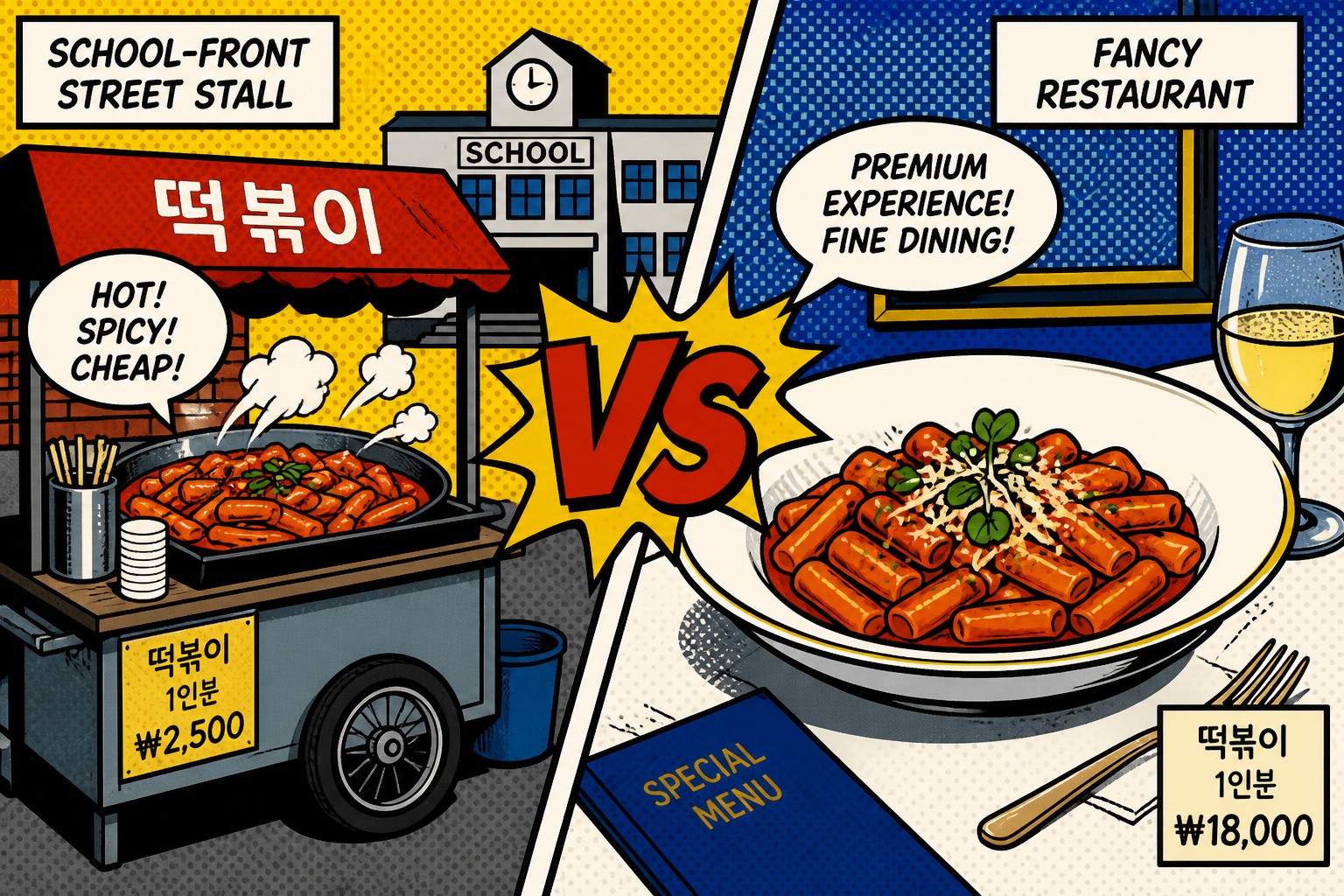
TL;DR
Cheap, thin, sweet schoolfront tteokbokki and richer restaurant tteokbokki share a name but not a technique.
Schoolfront tteokbokki is an economic artifact: thin 1cm tteok, plenty of fish cake, watery-sweet red sauce with more sugar than stock, and small prices for students spending pocket money. It cooks fast on a big flat cart and is eaten standing — nostalgia outweighs refinement and that is the point.
Restaurant tteokbokki uses thicker garae, anchovy stock, and less sugar, building body from tteok starch and sometimes cheese. It is a plated share dish with sides, often in a shallow hot pot that stays warm at the table — slower, deeper, designed to pair with beer.
Sugar tells you which you have. If the first hit is candy-sweet, it is schoolfront lineage; if the first hit is savory with heat blooming after, it is stock-based restaurant lineage. Neither is wrong; they are different cravings at different times of day.
Home cooks can straddle the line: use stock for depth but add a tablespoon of rice syrup to borrow schoolfront gloss and pull. That spoon of yeot (grain syrup) also adds shine and a brief chew on the teeth that plain sugar misses.
Regional notes appear too: Busan schoolfront leans brothier (near eomuk culture), Daegu leans spicier, Seoul chains lean sweeter. Try two neighborhoods' variations as a palate education before declaring a favorite.
Across the Kimchee Network
More from the Kimchee Network