CULTURE · 2026-08-11
The Street Ecosystem: Eomuk, Sundae, Twigim, and Tteokbokki
By Tteokbokki Curator
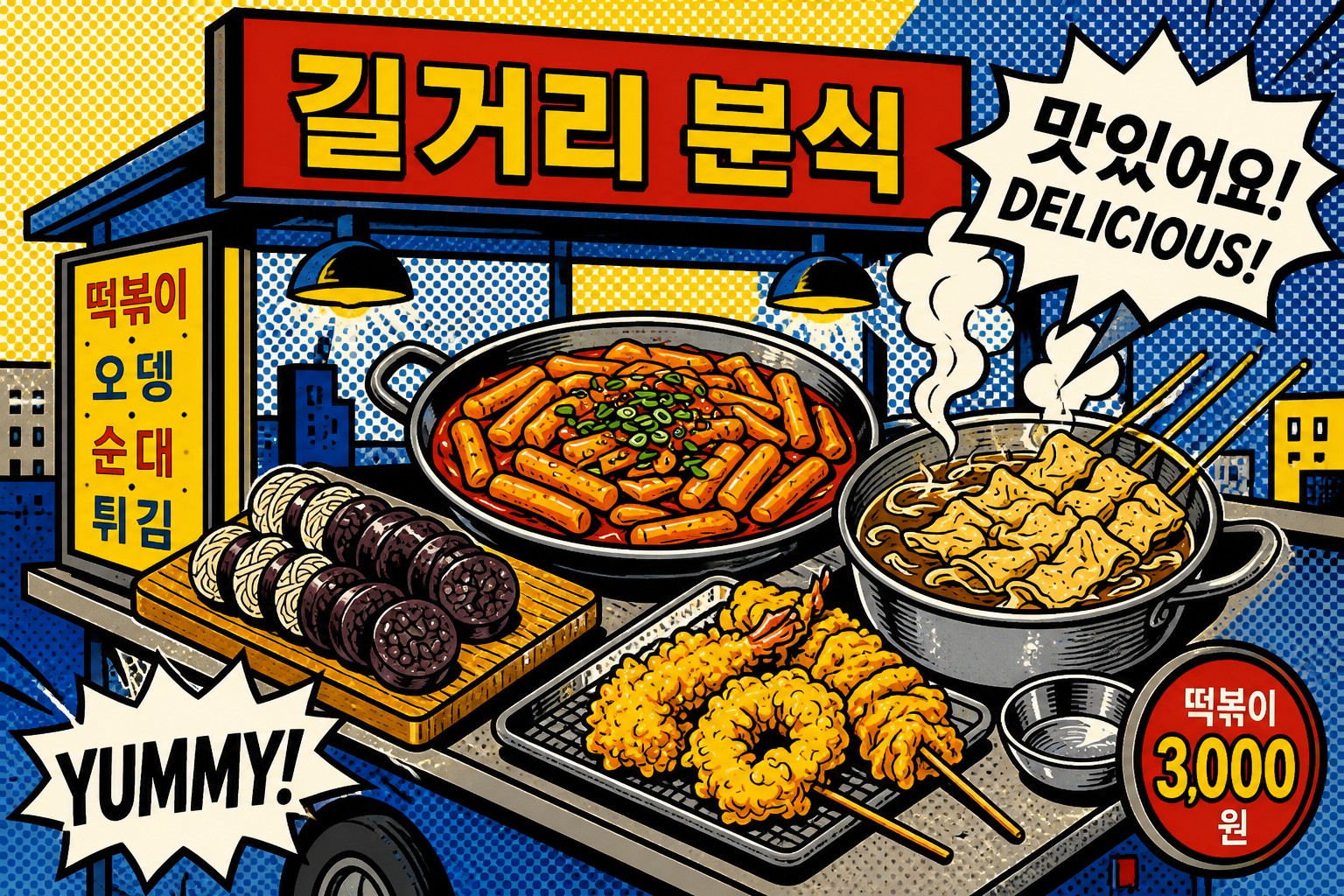
Tteokbokki never holds the street alone — eomuk skewers, sundae (blood sausage), and twigim (fried bits) complete the set.
TL;DR
Tteokbokki never holds the street alone — eomuk skewers, sundae (blood sausage), and twigim (fried bits) complete the set.
Walk a Korean pojangmacha or schoolfront and tteokbokki is the center of a system. Eomuk-guk (fish cake skewers simmered in the same stock family) provides clear, restorative broth that cleanses between chewy, saucy tteok bites — sip the broth, eat the fish cake, return to the heat.
Sundae — stuffed glass noodle and pork blood sausage — is the earthy, chewy counterpart that makes tteokbokki feel brighter. Dip a sundae slice briefly in tteokbokki sauce but do not drown it; the contrast is the point, like bread with stew.
Twigim (vegetable, squid, sweet potato fritters kept warm under a lamp) trades texture for tteokbokki's softness. The classic move is to dip a just-fried twigim half in sauce so it stays half-crisp; street regulars order a mix plate and build each bite deliberately.
That ecosystem explains sauce thickness. Street sauce is thinner than Instagram tteokbokki because diners dunk and sip; home tteokbokki goes thicker when it is the only dish on the table. Adjust stock down for dipping, up for spooning over rice.
If you recreate the street at home, make eomuk broth first and keep it at a low simmer beside tteokbokki — skewers for sipping, tteok for chewing, kimchi or pickled radish for acid. The variety is the era, not just the heat.
Across the Kimchee Network
More from the Kimchee Network