METHODS · 2026-08-08
Sauce First: Building Tteokbokki from Gochujang, Not Heat
By Tteokbokki Curator
Tteokbokki is a sauce — the rice cakes are the vehicle. How to get glossy, clingy, sweet-spicy balance without blowing heat.
TL;DR
Tteokbokki is a sauce — the rice cakes are the vehicle. How to get glossy, clingy, sweet-spicy balance without blowing heat.
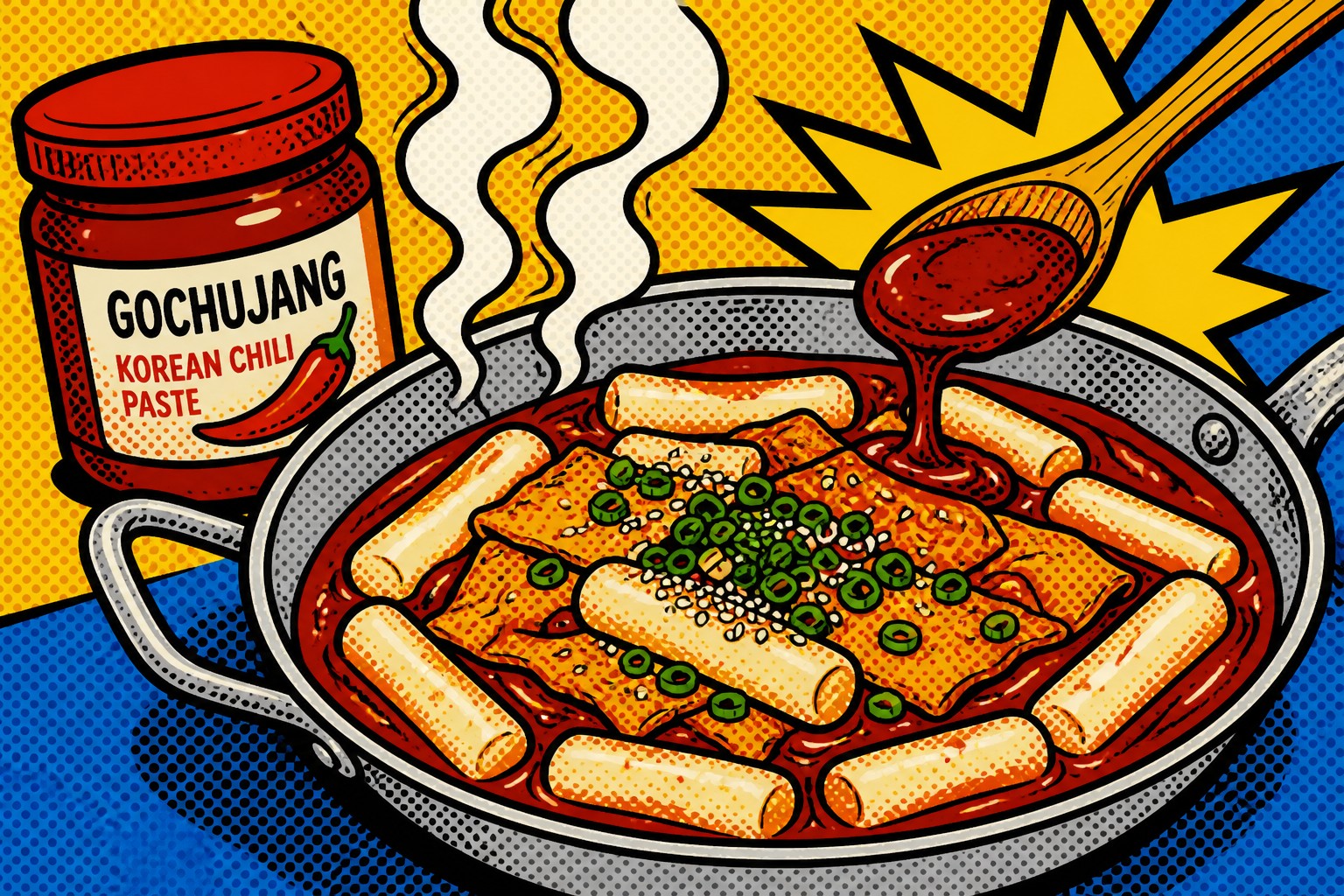
Great tteokbokki sauce tastes like sweet-savory with heat, not heat with a little sweet. Start from 3 Tbsp gochujang, 1 Tbsp gochugaru, 2–3 Tbsp sugar or rice syrup, 2 Tbsp soy, and 500 ml anchovy-kelp stock; the stock is half the dish — water alone leaves the sauce flat and one-note spicy.
Blooming matters. Simmer stock with dried anchovies, kelp, and a dried shiitake for 15 minutes, then whisk in gochujang off-heat so it dissolves smoothly; add gochugaru after boil to keep its color bright rather than scorched. That order is why restaurant tteokbokki glows red instead of brown.
Rice cakes hydrate before they cook. Soak refrigerated garae-tteok 15–20 minutes in warm water so they puff then braise rather than seize; frozen cakes need a full 30-minute soak. If your tteok splits or tastes chalky in the center, it was under-soaked, not undercooked.
Thickening is starch, not flour. Let the tteok itself thicken the sauce as it simmers 8–12 minutes — add starch slurry only if you used pre-cooked or low-starch imported cakes. Over-reduction dulls aroma; pull while it still looks slightly loose, it will tighten off-heat.
Finish with sesame oil and scallion after flame off; add cheese only at the end if you want rosé style. A teaspoon of butter at the finish deepens gloss without greasiness, especially for takeout containers where sauce continues to set.
Across the Kimchee Network
More from the Kimchee Network