VARIATIONS · 2026-08-10
Beyond Red: Rosé, Jjajang, and Cream Tteokbokki
By Tteokbokki Curator
The tteokbokki family has branched — rose, jjajang, and cream styles borrow from Korean bar food and feed a different craving.
TL;DR
The tteokbokki family has branched — rose, jjajang, and cream styles borrow from Korean bar food and feed a different craving.
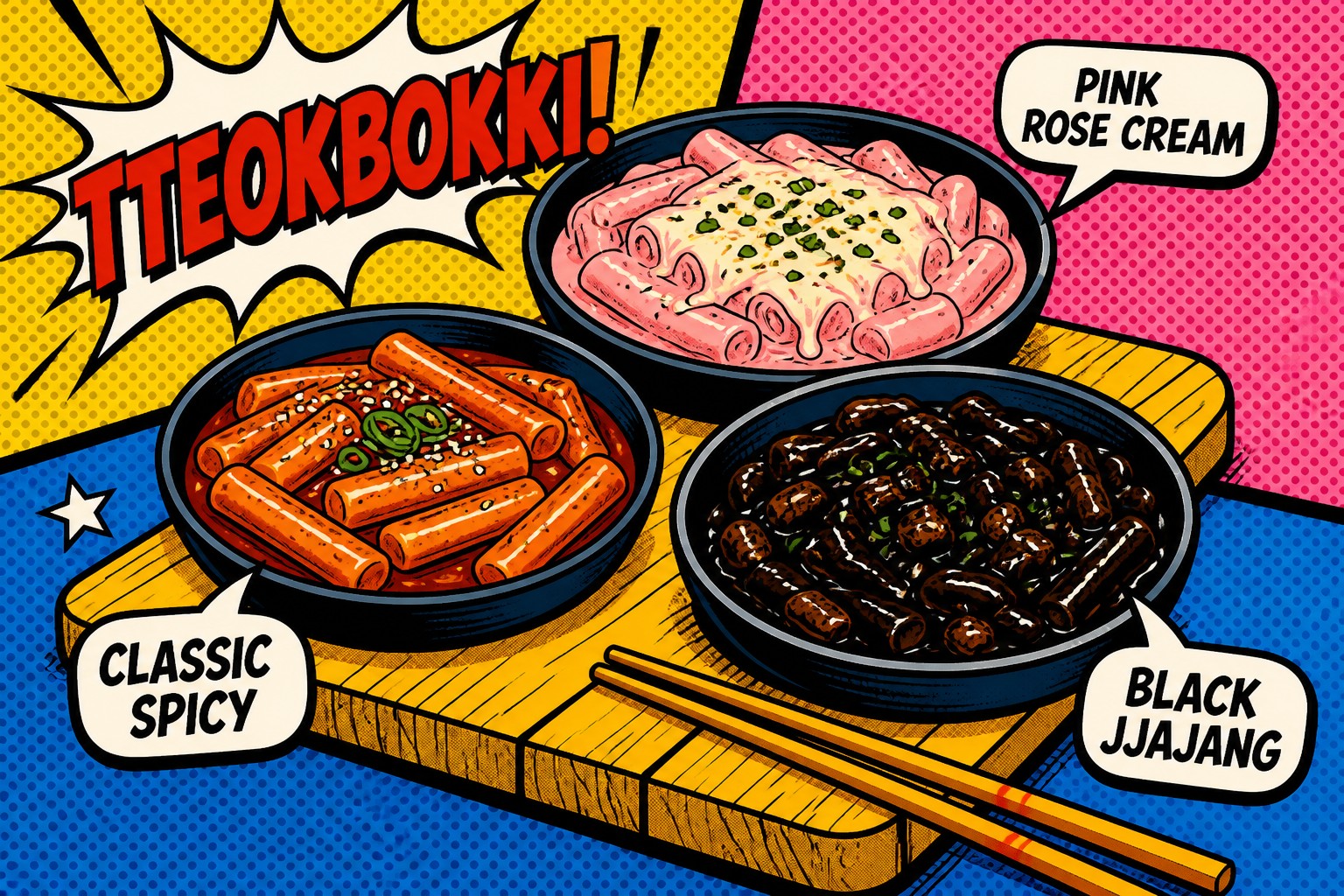
Rosé tteokbokki is tteokbokki meets soju-bar pasta. Start from classic red sauce, then stir in 200 ml heavy cream and a handful of mozzarella off-heat; the cream buffers gochugaru heat so you taste dairy sweetness first, then a slower chili finish. It is a gateway for spice-shy eaters and a late-night share plate.
Jjajang-tteokbokki swaps gochujang for chunjang-based jjajang. Fry jjajang paste with pork belly dice and onion, loosen with stock, then braise tteok in that glossy brown sauce. It reads savory and slightly bitter — add a pinch of sugar to round it and finish with cucumber julienne to echo jjajangmyeon.
Cream tteokbokki (no gochujang) is essentially tteok-garlic-cream like a rice-cake gnocchi. Sauté garlic and mushrooms, deglaze with stock, add cream, parmesan, and pepper, then braise tteok; peas or spinach keep it from feeling heavy. Kids who reject red tteokbokki often love this first.
Curry tteokbokki and mala tteokbokki are legitimate street variations that import Japanese curry powder or Sichuan peppercorn and chili crisp. Use them sparingly — half the spice you think — because tteok amplifies heat as it sits.
Menu strategy: if you run a pop-up, offer one red classic, one dairy (rosé or cream), and one jjajang; cover heat-averse, spice-loving, and savory-bitter palates without stocking a separate pantry.
Across the Kimchee Network
More from the Kimchee Network